
Don’t just take my word for it: the Finnish underground jazz scene is bubbling. You might want to listen to Gilles Peterson, who has repeatedly highlighted the fresh sounds emerging from Finland on his BBC Radio 6 Music broadcasts. In particular, Peterson has shown a keen interest in the growing network of small, artist-driven operations releasing music that often slips under the mainstream radar. Among those labels, Tampere-based Ultraääni has become a frequent point of reference.
In a surprising twist, the epicentre of Finnish jazz innovation, at least in terms of labels, appears to be shifting away from the capital Helsinki toward Tampere, a former industrial stronghold in the heart of the country. Tampere is Finland’s third-largest city, home to roughly a quarter of a million inhabitants. The city regularly attracts world-class touring artists and has served as a filming location for several international movie productions.
Over the past few years, the city has spawned a cluster of adventurous jazz labels: Ultraääni, Mustik Motel Music, Puro Recordings, and the long-running Eclipse Music. Their releases collectively challenge Helsinki’s long-held dominance of the Finnish jazz narrative.
Hidden gems and hand-printed album covers
One of the key trailblazers is Ultraääni (Finnish for ultrasound), a label whose origins are as unexpected as its output. Founded nearly a decade ago by Arsi Keva, Ultraääni grew out of skateboarding culture, punk zines, and a deeply ingrained DIY aesthetic. Keva noticed that many of his friends were making remarkable music that rarely received official releases.
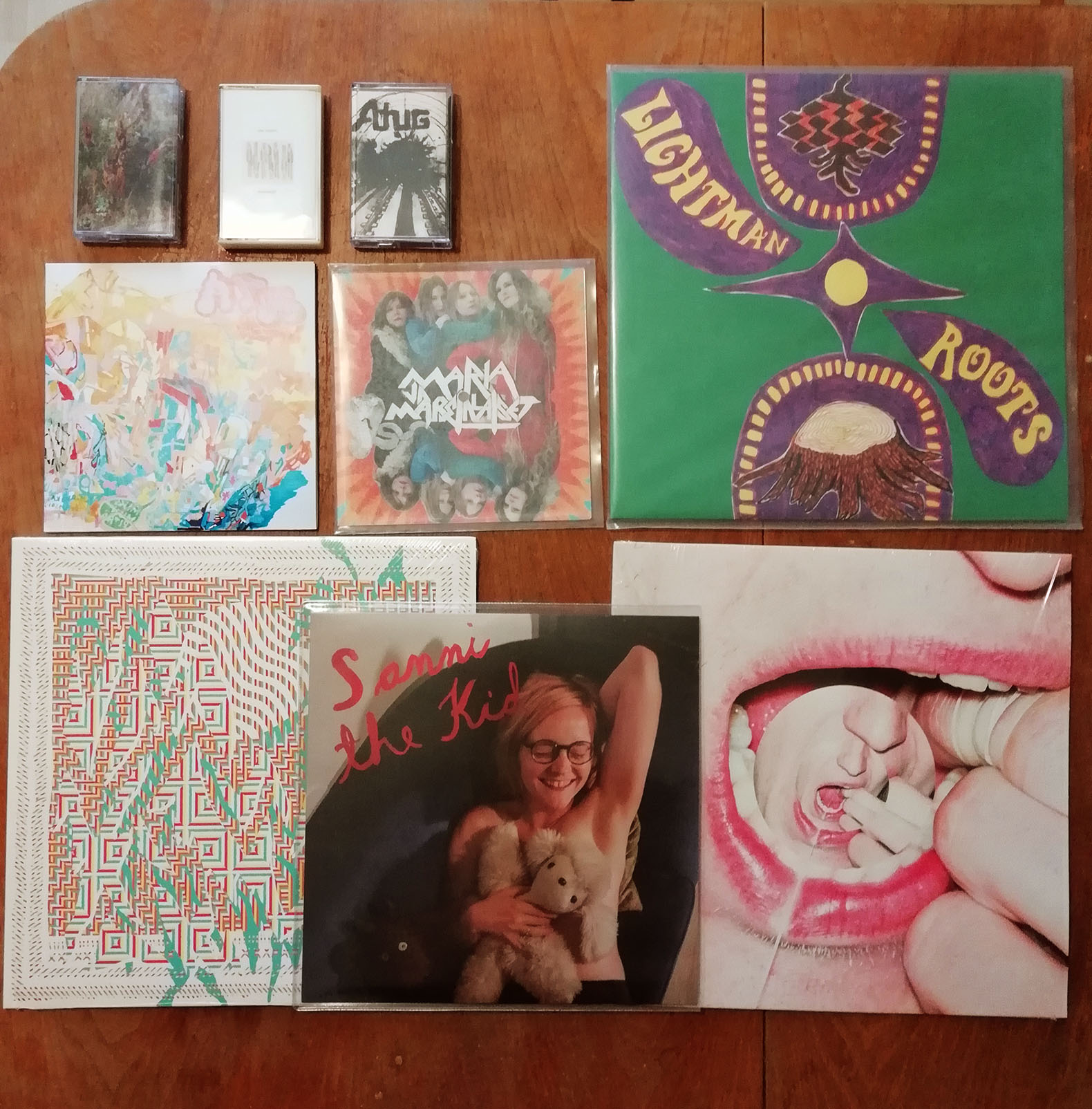
“It was all about collaborating with friends,” Keva recalls. “At first I was just designing flyers for their bands. The first musical release was a small batch of maybe fifty cassettes, made for friends.” That ethos still defines the label today.
A major turning point came in 2019, when Ultraääni released its first vinyl record: a debut by the outsider-jazz collective Oiro Pena, led by the elusive drummer Antti Vauhkonen. The album quickly found its way into the hands of radio hosts and jazz DJs, eventually receiving airplay on the BBC. What began as a hyper-local project in Tampere suddenly resonated far beyond Finland.
“I don’t want to do heavy marketing,” Keva says. “I like the idea of these records being hidden gems that are something listeners really have to dig for.”
Despite growing international interest, Ultraääni remains a one-man operation. Keva oversees everything: curating releases, handling distribution, and designing and hand-printing the album covers himself. Most releases are kept deliberately small, though recent Oiro Pena records have reached pressings of up to 750 LPs.
A defining feature of Ultraääni releases is their visual identity. Each album cover is hand-printed using serigraphy, a traditional silk-screen printing technique. Unlike standard offset printing, where thousands of identical covers are produced by machine, serigraphy is done layer by layer by hand. This process introduces subtle variations in color and texture, meaning no two covers are exactly alike. Each sleeve functions not only as packaging but as a standalone art print. Often, the musicians themselves participate in the printing sessions. “To me, the main attraction in creating records is designing the complete visual and sonic artwork,” Keva states.
.jpeg)
Collabs are not just for artists anymore
As interest in Tampere’s jazz output has grown, the city’s labels have increasingly found strength in collaboration.
Following the success of Ultraääni and the long-established Eclipse Music (founded in 2007), two newer labels emerged in 2024: Mustik Motel Music and Puro Recordings. Mustik Motel, despite its relatively short history, has already built a strong and fast-growing catalogue. The label shares distribution and inventory infrastructure with Ultraääni, a practical alliance that reflects the cooperative spirit of the scene.
Run by tech enthusiast and DJ Antti Kujala (also known as DJ Jukola), together with mastering engineer Jarno Alho, Mustik Motel has enjoyed rapid critical acclaim. Recent releases have earned multiple five-star reviews, and one of the label’s standout albums by vocalist Kadi Vija has been nominated for Finland’s prestigious Emma Award, often dubbed the Finnish Jazz Grammy.
“We suddenly found ourselves in a wild situation,” Kujala laughs. “Lauri Kallio’s debut kept getting five-star reviews, and then Eero Savela’s debut trumpet album followed with the same response.”

Unlike Ultraääni, Mustik Motel set its sights on an international audience from the outset. “Outside Finland, there’s simply a much larger jazz audience,” Kujala explains. “So we built everything from day one with that in mind.”
For Alho, the appeal of running a label goes beyond distribution. “I love the game of building a label,” he says. “It’s like playing with Lego: you’re creating an entire universe of your own.”
While Mustik Motel doesn’t hand-print its covers, it places strong emphasis on visual art, commissioning work from Finnish artists such as Ninni Luhtasaari and Stiina Kokko. In both Ultraääni’s and Mustik Motel’s cases, the result is deeply artisanal jazz releases where sound and image carry equal weight.
Rounding out Tampere’s jazz ecosystem are Puro Recordings and Eclipse Music. Eclipse, founded in 2007 and led by guitarist and songwriter Tapio Ylinen, boasts the city’s longest and most extensive jazz catalogue. Puro Recordings is the newest arrival, having released its first album in 2024, yet it has already established a distinctive voice and participates in shared distribution efforts with the other labels.
Together, these four labels form a remarkably dense and collaborative scene for a city of just over 260,000 residents. With its steady stream of daring releases and an ever-expanding network of artists, Tampere has become an unlikely but undeniable hotspot for contemporary jazz.
There really must be something in the water.
Featured photo Alfred Öhberg (Museovirasto, Historian kuvakokoelma)