“Is this music?” a small child whispered during a show on Flow Festival’s all-ages Sunday afternoon. A fair question!
Onstage were writer-vocalist Niillas Holmberg, who read his poems and chanted Sámi joik vocals, and Pauli Lyytinen, who added saxophone, vocal drones and loops, thumb piano and bells. Through improvisation, the two vividly expanded pieces from their 2025 album Naarattu laulu as part of Flow’s Other Sound series.
Besides the kid’s excellent question, another one often came to mind during Other Sound concerts: “is this jazz?”.
Like Lyytinen, many artists who appeared during this festival-within-a-festival started off in straightahead jazz before branching off into other genres and uncategorisable sounds.
These included saxophonist Linda Fredriksson, who appeared with the trio Kiri Ra!, and pianist Aki Rissanen, who played a hypnotic, minimalist set on an experimental instrument called the Omniwerk.
Along with more mainstream Finnish jazz acts, they were part of Flow’s biggest-ever cross-section of the local scene – and an apt, forward-looking way to honour the 100th anniversary of Finnish jazz.
Some cultural historians date the birth of the country’s jazz scene to a Helsinki gig by an American jazz band on 17 August 1926 – a century and a day from that Sunday afternoon.
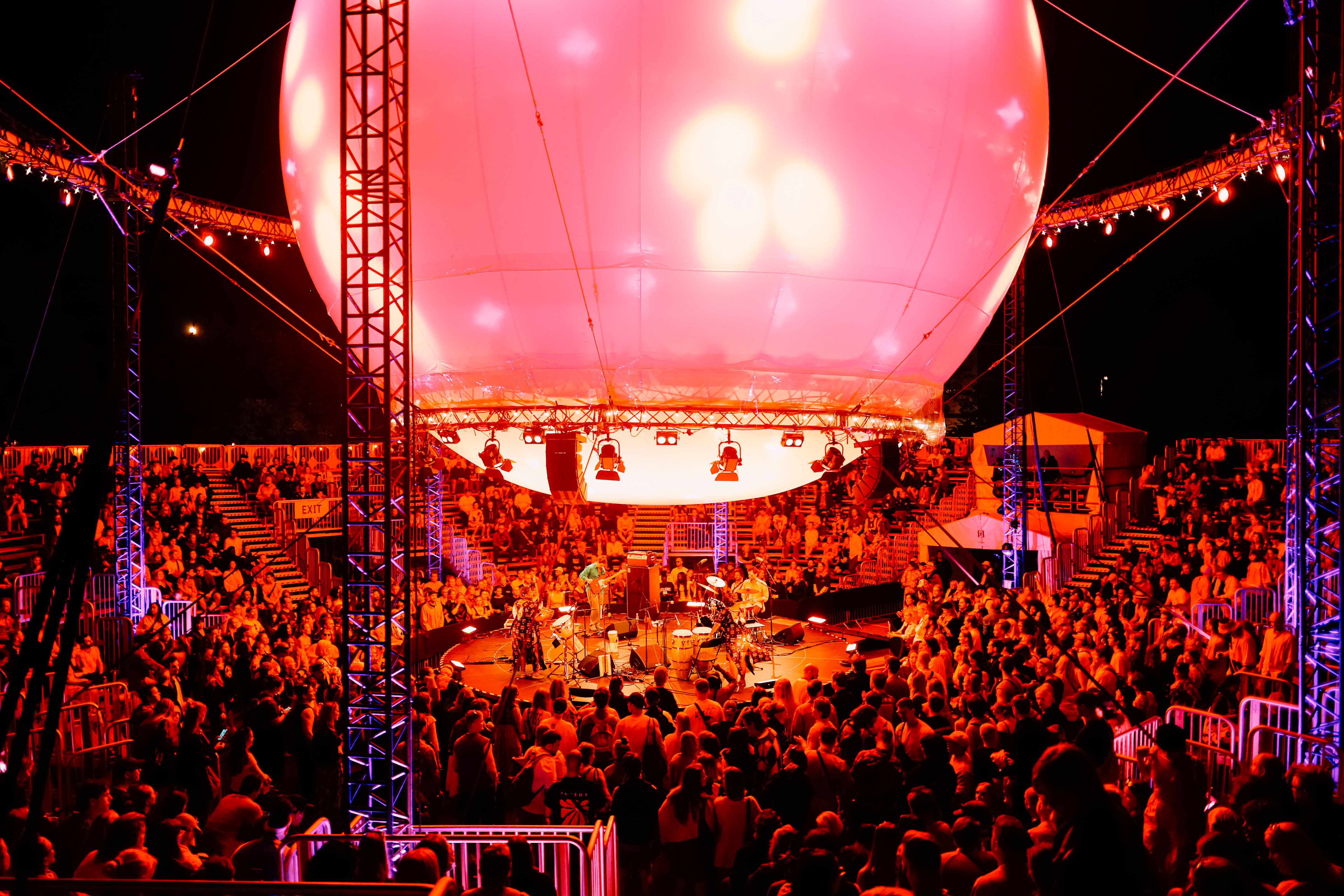
Flow and its founders have played a pivotal role in the past quarter-century of Finnish jazz. Since its grassroots beginnings in 2004, the event has booked major jazz figures like Pharaoh Sanders, Roy Ayers, Brandee Younger and Kamasi Washington, along with domestic talents, who were the sole focus this anniversary year.
The festival was launched by the Nuspirit Helsinki collective, which included Tuomas Kallio, the festival’s artistic director until 2007, and Toni ‘Lil'Tony’ Rantanen, who still handles Flow’s artist booking and DJs every year at the festival.
Other Nuspirit members included trumpeter Jukka Eskola and drummer Teppo Mäkynen (aka Teddy Rok), who joined the Five Corners Quintet, which Kallio launched a year before the festival. That group, gleefully mixing 60s soul-jazz with oughties dancefloor urgency, helped kick off a new wave of Finnish jazz, embraced by hip young audiences.
Members of that group, including saxophonist Timo Lassy, went on to become major solo artists while frequently collaborating in various configurations – often at Flow.
This year, Eskola and Mäkynen brought their two-year-old Drum’n’Brass project to the festival’s trademark Balloon 360 stage, the intimate setting for the more mainstream jazz shows. Drum’n’Brass features the nine-piece Guards Brass Collective, assembled from the Finnish Guards Band. That ensemble has a history twice as long as that of Finnish jazz, making it the country’s oldest professional musical group.
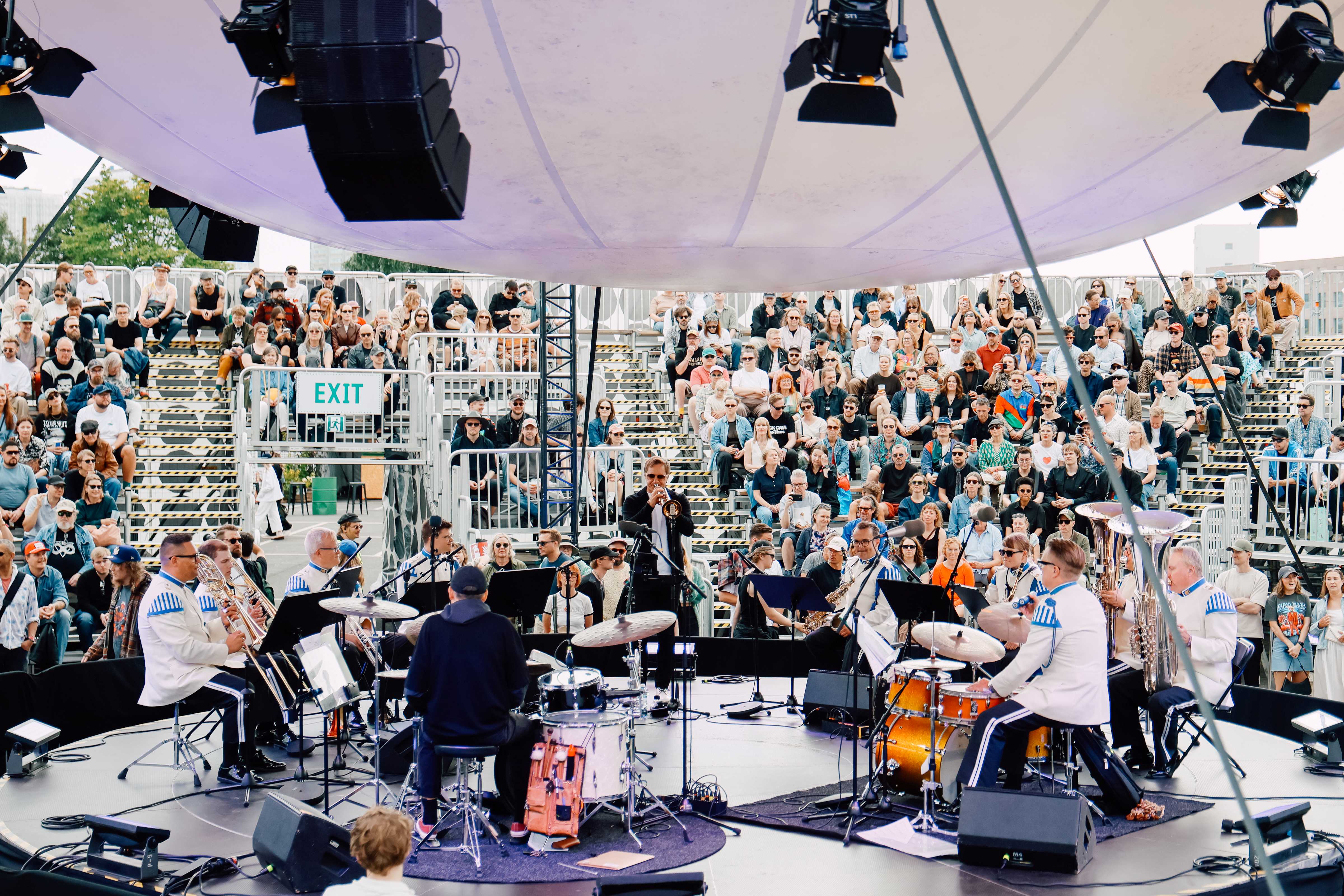
While jazz giants such as John Coltrane, Dave Brubeck and Clark Terry played in military bands, the armed forces’ focus on conformity and rigid hierarchies seems at odds with jazz expression and free improv – though both fields demand discipline.
The sight of eight men and one woman seated motionlessly in starched white uniforms was a bit startling in this setting, but Eskola and Mäkynen deserve a salute for trying something different. These top-notch musicians undeniably brought firepower to this mix of funk, jazz and marching band music, but the result seemed regimented and a bit dull, with Eskola’s trumpet and fluegelhorn solos less sparkling and free-flowing than usual.
The set livened up towards the end with “Low Motion,” soon to be released as a vinyl single ahead of the duo’s forthcoming Drum’n’Brass album.
That tune is funkier, echoing the New Orleans second line marching band tradition, as Eskola did on the 2024 album Nordic Stew with Lassy and top Louisiana musicians. To end the show, Mäkynen unleashed a solo that showed once again he’s one of the country’s most masterful jazz and funk drummers.
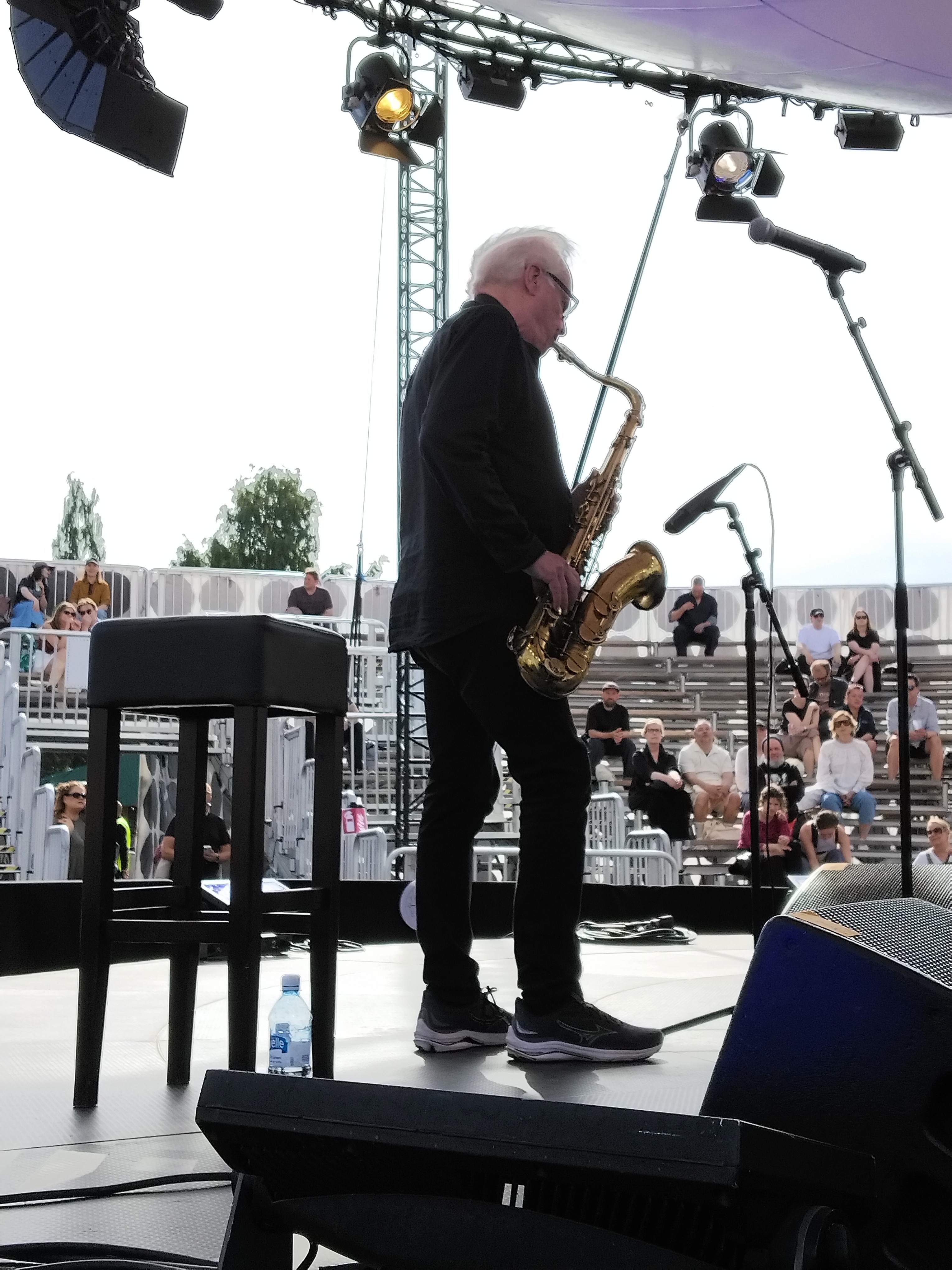
Other jazz acts at the round Balloon Stage included two legends, saxophonist Eero Koivistoinen, 80, and Juhani Aaltonen, a former saxophonist who now plays gorgeous flute, at age 90.
They were among the first Finnish jazz artists to gain an international reputation starting in the 1960s, studying in the US and collaborating with major stars. We’re lucky to have both still vigorously performing, recording and composing.
Aaltonen’s flute sounded completely assured, alternately florid and forceful. He was backed by Finnish jazz royalty: pianist Iro Haarla, bassist Ulf Krokfors and drummer Reiska Laine, with a collective career experience of well over two centuries.
This was a group conversation among old friends who can read one another’s thoughts – and who invited the listeners to join in that communion, without much needing to be said overtly.
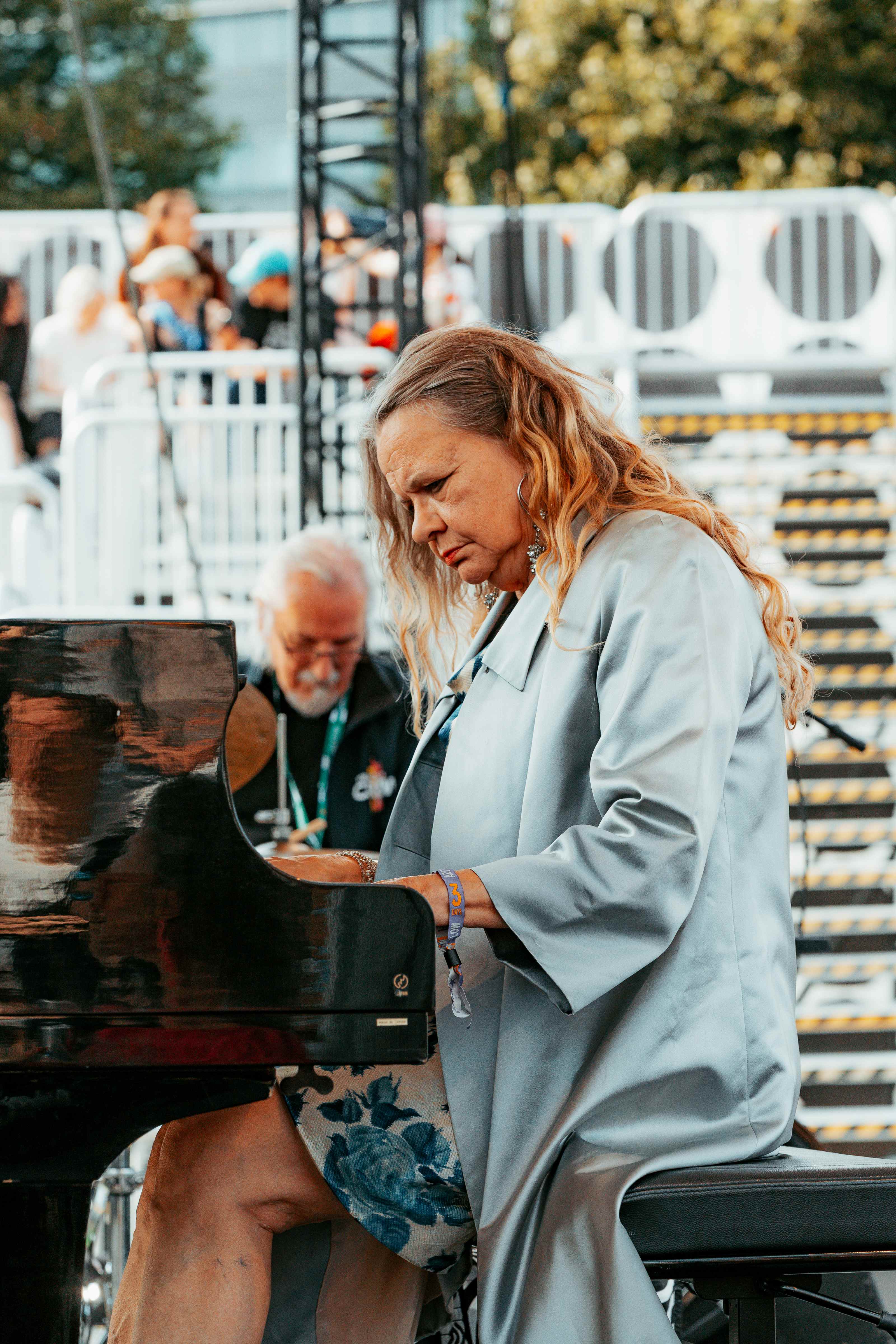
Koivistoinen was in mighty form, leading a younger band featuring pianist Alexi Tuomarila, whose tumultuous solos urged on the rhythm section of Jori Huhtala on bass and the hard-charging Jussi Lehtonen on drums.
The set was all Koivistoinen originals except for “The Times They Are A-Changing,” a rare jazz interpretation of Dylan. The sax giant was magnificent on his Afro-Cuban-influenced “Casa de Ferro,” composed in Mozambique, which he has recorded with Lassy.
Joining in for the last few songs was Nina Mya, one of Finland’s most expressive singers with deep gospel, soul and blues tones. She sang her own lyrics to several Koivistoinen tunes, including the new “What Can I Do?” Its rolling, floating groove was perfect for a sunny day under blue skies, with smiles all around for 360 degrees.
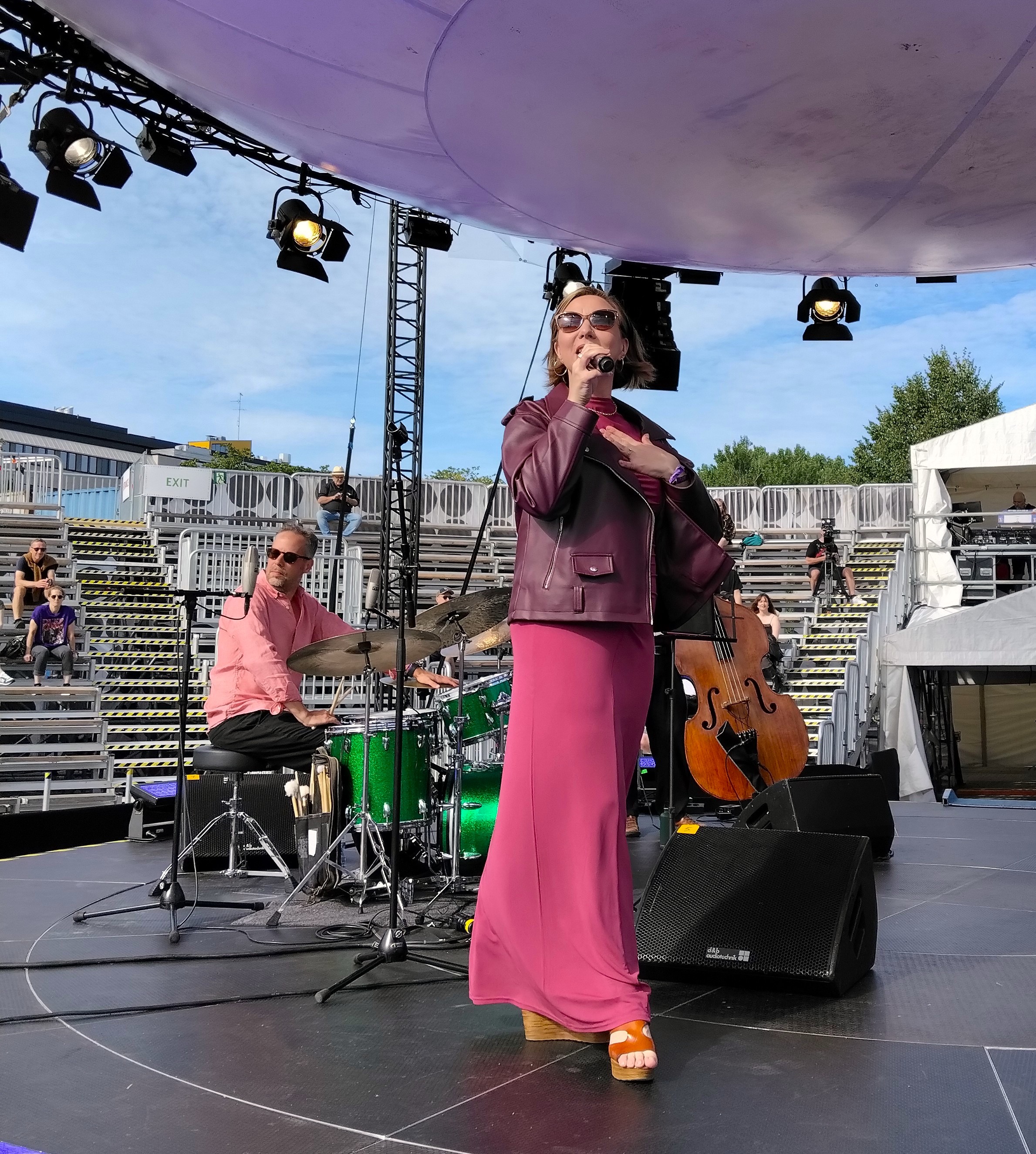
Bringing a more playful groove to the round outdoor stage was showman Jimi Tenor, leading a quintet on sax, flute, keyboards and vocals. This was an ideal summer festival band, with all five members switching between instruments, adding vocals and genuinely having fun onstage. That was a contrast to Tenor’s staid, restrained appearance a few years earlier on the same stage with the UMO Helsinki Jazz Orchestra. This was much more exciting and unpredictable, with one long piece evolving through spacey synth, African talking drum solos and Sun Ra-styled free jazz. Heikki Tuhkanen’s tuba laid down a fat bass line on one tune, forming a yin-yang contrast with Tenor’s fluttery flute.
Anyone who plays drums for Tenor has big shoes to fill, since he has recorded with the late Nigerian legend Tony Allen, whom Brian Eno called “perhaps the greatest drummer who has ever lived”. No pressure then… Fortunately this band includes two stellar drummers, Eeti Nieminen, who played with Fredriksson in the Mopo trio, and the Ghanaian-born Ekow Alabi Savage, who nearly stole the show with his Afrobeat percussion and growling vocals, weaving “Soul Makossa” and James Brown interjections into “Looking for the Sunshine”.
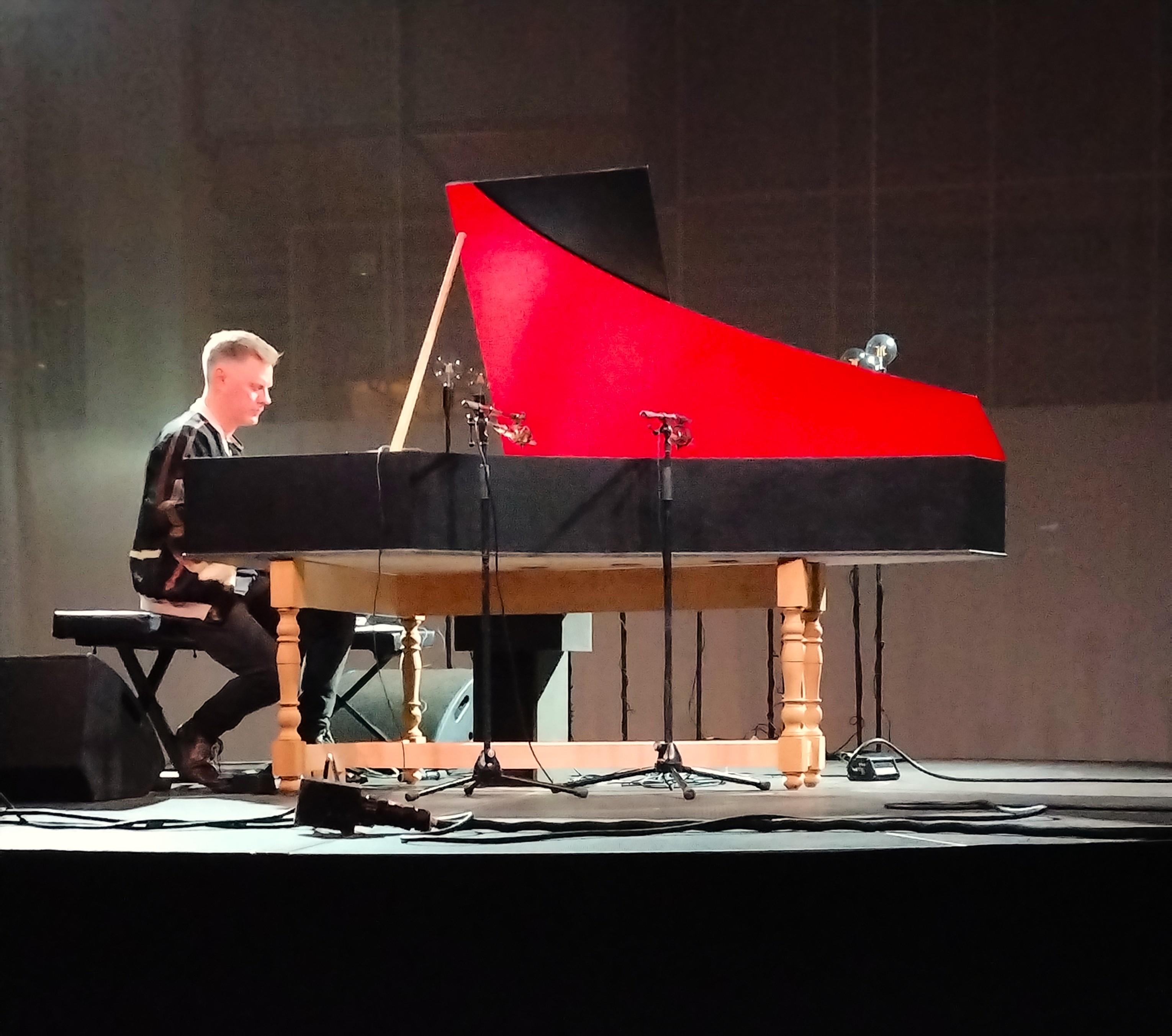
Back indoors at the Other Sound, there was more cerebral stuff with Aki Rissanen’s hypnotic solo performance on the Omniwerk, a hybrid keyboard instrument inspired by Leonardo da Vinci and JS Bach.
With strings that can be bowed and plucked at once, it sounds variously like a harpsichord or a Japanese koto. At other times, Rissanen’s playing suggested microtonal maqam scales of traditional Arabic music, bringing to mind explorations by another Finnish multi-genre keyboardist, Kari Ikonen.
Rissanen layered all of that with live sampling and looping, percussive effects, ambient whooshes and electronic beats, constructing a startling soundscape that points towards the future.
So too did the quieter, more free-form set by Kiri Ra!, featuring Fredriksson with multi-instrumentalist/vocalist Lau Nau (Laura Naukkarinen) and Swedish keyboardist Matti Bye.
The trio’s seamless, improvised hour-long set included elements from their second album, nen, released on theWe Jazz label in May, such as Fredriksson’s haunting alto saxophone melody from the track “ahiahi”, sounding warm and velvety with a breathy edge. Fredriksson also played bass clarinet and various whistles and bird calls.
Besides synthesizer and gentle wordless vocals, Naukkarinen added sounds from various small xylophones, ping-pong balls and spinning tops. Bye mostly remained in the background, providing subtle ambient drones, but finally stepped forward with a lovely, limpid piano solo near the end, the other two backing him with subtle percussion.
The set moved gradually forward like a trip down a river, seeming calm on the surface, yet always changing with a rich, organic flow. And yes, it was cinematic – the group often accompanies silent films and will do so next on 6 September in Stockholm, performing with an outdoor screening of the 1922 horror classic Häxan (Witchcraft Through the Ages).
The group first accompanied that film back in 2015 with multi-instrumentalist Samuli Kosminen, who appeared this weekend behind the drum set with the Icelandic art-pop band múm.
Fredriksson, too, appeared on another stage backing Helsinki indie-pop singer Arppa. The saxophonist was part of a band packed with local jazz talent: bassist Eero Seppä, drummer Okko Saastamoinen, keyboardist Mikael Myrskog, as well as along with saxophonist Adele Sauros, who plays in Superposition with Fredriksson. In between Arppa’s laidback rap-inflected vocals, they went off on extended solos and jams, enthralling the mostly young crowd – suggesting that a new audience is ready to embrace jazzy improv.
Flow Festival, Suvilahti, Helsinki, 14-16 August 2026
Featured photo Konstantin Kondrukhov.