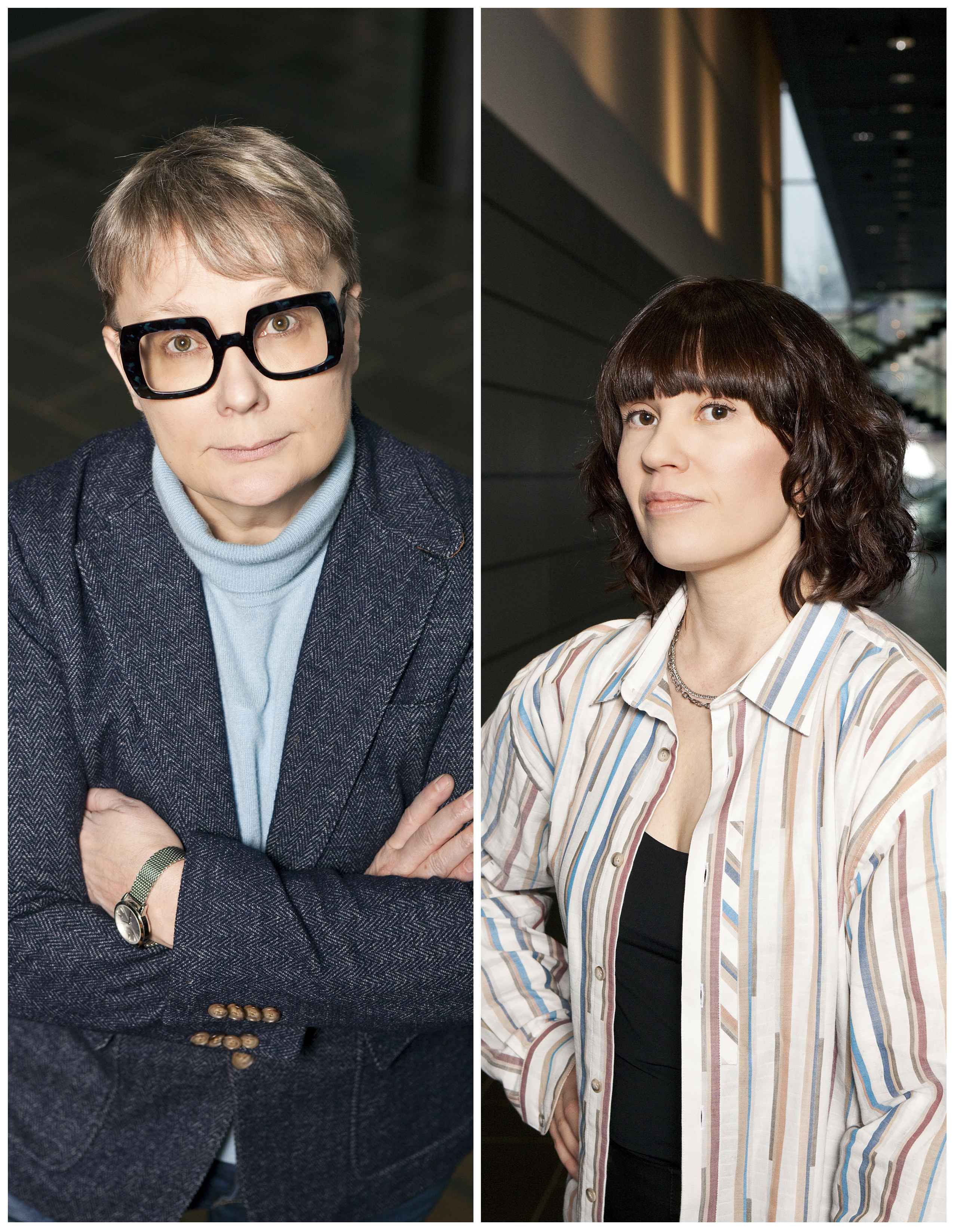
Music scholar Inka Rantakallio PhD and Susanna Välimäki, Professor of Musicology at the University of Helsinki, had a conversation in December 2025 about music research and its activist turn. Both are members of Suoni, a research association focusing on activist music research.
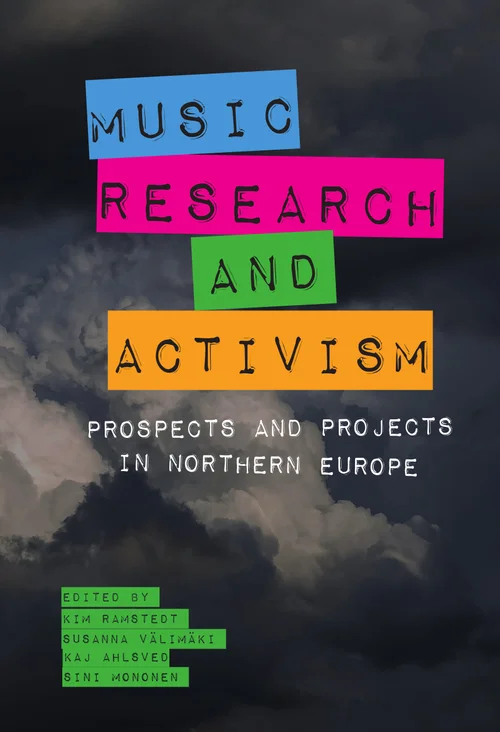
Inka: In June 2025, the Suoni research association published a book about activist music scholarship — Music, Research and Activism: Prospects and Projects in Northern Europe. Susanna, you were one of the editors, and I contributed an article. What does the ‘activist turn’ mentioned in the introduction mean? How did you and Kim Ramstedt, co-author of the introduction, understand this topic when you wrote it? Did you have a clear idea of what that turn was?
Susanna: We did when writing the book, but back when we established Suoni with other researchers (in 2017), not so much. A lot has happened in music research since then. Generally speaking, a ‘turn’ occurs when something that was previously a marginal trend in research enters the mainstream. In this case, it means a focus on social justice that used to be on the fringes of music research.
Inka: Right, and only a handful of researchers had concentrated on it.
Susanna: Exactly. However, in recent years multiple books have emerged in the field of music research and also arts scholarship more broadly that prominently feature the word ‘activism’.
Inka: Meaning that activism is explicitly considered in the research.
Susanna: Yes. But Kim and I were thinking of the entire field of humanities research. Music research is not alone in being swept into this turn. Of course, if by activist research we simply mean promoting social justice, then that is a very old thing. Public sociology, for instance, is by definition just that. But activist research has been gaining ground through the 2000s in rapid expansion. During that time, the topic of social justice has emerged in science in various ways, generating this activist turn. At the University of Helsinki, we have hosted two major international conferences on activist music research, which demonstrates that this approach is becoming firmly established. And we have been contributing to its establishment. Not everyone has to call it a turn, but we wanted to make the point that there has been a sea change. Today, activist research may be based on environmental activism, anti-racism or feminism, or it may criticise the current world economy and the capitalist system. People have been doing this in various disciplines and under various banners for some time, and they still do, but today the view that we are just academic scholars and that the action is somewhere out there has come to an end. Rather, I am a citizen and a human being while also being a scholar and having an impact on the world. But the mainstreaming of activist research does not mean that all scholars now have to engage in that kind of research; it just means that it has become a conspicuous strand at scientific conferences and in books, for instance. Free basic research is also important, and not everyone has to think about social justice all the time. The mainstream has to be pluralist, or the discipline will die.
Inka: Indeed. A field of science cannot have only one research approach. Activist research is just one among many. I found myself wondering where this activist turn originated. Texts published by Suoni talk a lot about how we are living in a world in crisis and that, on the other hand, Suoni was established for the very reason that academia and research are also in crisis. Do you think that activist research is the sum of all this, i.e. what has been happening in society at large and what has been happening in academia, or is one perhaps more important than the other?
Susanna: I feel that they are aspects of the same trend. We are also looking at a crisis of information and a crisis of the Western worldview. But my view is that underlying everything is a planetary crisis — not a crisis of academic institutions but a crisis of our living conditions and the impact of increasing inequality. The crisis of academia has to do with the notion that we, as scientists, should be leading on values, yet many feel that even science is now increasingly being harnessed to serve colonial, neo-liberal capitalism. Hence it is important for us to have a community of activist research where we can discuss the problem of how to be a researcher in this world and in this academic environment. But we should note that in the 2000s this trend has also been fuelled by developments in the media and technology.
Inka: Absolutely.
Susanna: We now know a lot more about what is happening, all the time, and we are able to communicate worldwide through the internet and social media. Moreover, as researchers we now have a different, global understanding of worldwide crises on the one hand and of science itself on the other. Something as seemingly simple as giving a course on the history of music is quite different now from what it was 20 years ago.
Inka: Yes, we have begun to see how white supremacy and Eurocentrism have influenced our knowledge base. Here in the North, or in what we call the West, we are accustomed to thinking that there is ‘normal’, supposedly ‘neutral’ knowledge and then there is a separate body of, say, ‘feminist’ knowledge or the knowledge of indigenous peoples. Today, we understand that our Eurocentric conception of knowledge is not neutral at all and that our way of producing and using knowledge in itself upholds power structures. We are increasingly hearing opposing views, or talking back, as bell hooks puts it. Social media is a vehicle for democratic production of knowledge, as indeed is the internet as a whole. There is much more knowledge out there than what is contained in academic journals behind a paywall.
Susanna: Of course, misinformation and that sort of thing also contributes to the situation. I believe that the current trend represents an even greater transition in academia than we now realise. I believe that — despite all the crises — decolonisation and other renewal trends in science offer the possibility of a sort of positive collapse. This would force us to rebuild things and reconsider our thinking, because the science and technology we now have do not have the ability to bring those crises under control. If they did, those crises would have been resolved ages ago. We need to bring about that transition in thinking. Decolonisation goes to the very roots of science and can revitalise science to facilitate preserving as much of the network of life as we possibly can. People think that the world today is such that we absolutely must react to it. How can I say that I am a thinking human being if I do not consider the injustice in the world, especially if I am a scientist and as such have a certain kind of power? Here in the North we have so many opportunities to do so many things, and so I simply have to take this into account in my research.
Inka: I think that appealing to emotions and appealing to values certainly play a major role in that transition, because at the end of the day people are not as rational as we would like to think.
Susanna: Indeed. We cannot work that way. Today we understand much more about how knowledge is constructed socially and that there is no such thing as neutrality. This does not mean that we could not strive to be objective. We just need to be more precise about defining our terms and premises.
Inka: This brings us to the issue of the ethics of science. We need to declare all the information that is relevant and necessary for our research and to be transparent about our position or relationship to the object of research, and not conceal or distort things.
Susanna: It is quite healthy for researchers to have to consider the ethics of science and the knowledge interests. After all, it is a classic question in the philosophy of science: why do I want to produce knowledge? For instance: truth is a value in science and will most probably remain that way. But whose truth, and how do you define truth? I have been interested in indigenous studies for a long time partly because people in that field are engaged in the philosophy of science, reconsidering basic scientific concepts on the basis of the concepts and worldview of indigenous peoples, such as the Sámi. There is a direct link here to environmental issues and to decolonisation, of course. The notion that you can do whatever in the name of science and that the ends justify the means for scientific purposes is outdated. Like a researcher going and walking all over the sacred places of indigenous people in the name of ‘science’. Today we understand that that is unacceptable. Science is not the supreme value that can sanctify anything, which should be quite obvious if we think about animal testing or medical research. Some may complain that it just complicates research having to consider things like applying for statements from an ethics committee. But maybe it would be better just to think that science itself has changed and that this is how we do things now.
Inka: This is the new normal.
Susanna: Yes, and not only normal but important — at the very core of science! We should see it as a positive and embrace it in our research.
Inka: Right. I think it is wonderful that we are reconsidering what it means to practice science and that all this is an essential part of it, not just annoying hoops to jump through. The issue of truth and knowledge is of topical significance also because these are being questioned by certain parties, researchers are being targeted because of keywords like feminism, race and climate change. Music scholars are no exception.
Susanna: In Finland, there is quite a lot of feminist music research at the moment. Music is a platform for societal struggles, as can be seen in this research.
Inka: An activist researcher will inevitably meet with resistance to change and may be a source of annoyance for other people, including other researchers. There are people who do not want this kind of research being funded. How should an activist researcher respond to this? With whom should they engage in dialogue to explain their motivation, their premises and their knowledge interests?
Susanna: My thinking is that there is no need and indeed no point for an individual researcher to engage in conversation with the anti-science lobby; it is exhausting and time-consuming. I think it is the job of scientific societies and major institutions such as the Research Council of Finland and the Finnish National Board on Research Integrity to make the case for what science is and why we need it.
Inka: This leads to the question of where this debate should be held, because it now largely happens on the internet and on social media, and major institutions are not really equipped to function in such an environment except maybe by posting unilateral comments on their own websites. Still, there are individuals who do engage in active debate in comments on social media.
Susanna: That is very important. I have retreated from social media myself in order to work in peace, but not everyone can do that. What do you think?
Inka: I am a sensitive person. Although writing is a natural means for me to express myself, the reactive nature and fast tempo of social media are in my mind incompatible with the kind of deep thinking that I want to promote as a researcher and that is our specialist competence. I have no solutions as to what would be a constructive way to engage in debate. Still, I also think that we cannot all just quit social media.
.jpg)
Susanna: A better understanding of other research approaches helps you better understand activist research too: what it is about, how it differs from other kinds of research and how it is similar. I like to strive for an open definition of activist music research to make it inviting, to make all researchers interested in issues of social justice see that they are welcome to meet other researchers and to engage in activist research. To understand that there is no one true way of doing things.
Inka: Right, so one should never say that “you are not activist enough, because you are not doing this and this and this”.
Susanna: There are always things to learn, and it is easier to learn in a community than on your own. For instance, learning to analyse white supremacy or learning anti-racist practices — that is much easier to do together. Part of the impact of the turn we are discussing is that it is changing teaching and curricula.
Inka: You can definitely see activism at work in university teaching too. We introduce research into our teaching. I myself do not know any activist researcher who does not make their research part of their teaching or public lectures and other public appearances. What does it do to our knowledge and our understanding when we talk about a turn? Instead of just labelling some research as ‘activist’, I mean. Is using the word ‘turn’ significant in itself?
Susanna: An interesting question. Certainly it is an invitation at least to our colleagues: have you thought about this, would you be interested and can you see the relevance in your research? A wake-up call to stop for a minute and consider it. If we recall that we have had a performative turn or a linguistic turn or a constructive turn — those have been huge changes. Or the cultural turn in ethnomusicology or the new musicology. Obviously the cultural turn was such a fundamental shift that these days you do not even need to specify that you are doing cultural music analysis.
Inka: It depends a bit on who you are talking to. Within the field you do not need to explain, but you may need to provide background to people who do not know what musicology is. I happened to meet some graduate students in physics, and their first response was that musicology had to do with the theory of music somehow, or that at least I must play an instrument. I had to resort to the term ‘cultural musicology’ to explain that I am interested in how music works and has influence in society and what values are ascribed to music.
Susanna: It is interesting to think about what this turn means and how it is defined in the various branches of musicology such as music education, music theory, ethnomusicology if we wish to make that distinction, history of music, philosophy of music, music analysis. The turn is relevant for all of them.
Inka: Yes, and not just for the sociology of music, for instance.
Susanna: This turn underlines the historical distinction and development that while there has always been research on social justice, it has suddenly become a major issue. Each era has its own major issues, and this is not just about the development of science itself but about the world at large. Since people are having a tough time coping with a world in crisis, the turn represents a response to existential issues as well. Doing something eases anxiety, and then you can discover positive things and doing things together. This turn involves a strong sense of community, as a reaction to hyper-individual performance-based capitalism.
Inka: It is empowering to discover people who share the same values as to what we can do in this discipline and in this world to make it just a tiny bit better place for all of us. By joining forces, we can mitigate the despair of our condition. As a member of Suoni, I have felt this: being a member of a community and being empowered by it amidst all these crises.
.jpg)
Inka: Before this discussion, I thought about your work, for instance on women composers forgotten by history, and the activist features of your research. I also considered the activist turn in relation to my own research on feminist practitioners in rap music and how they seek to change normative and exclusive thinking in the genre. Your project and book with Nuppu Koivisto-Kaasik (Sävelten tyttäret [Daughters of Music]) and the book Kuka kuuluu [Who belongs], edited by Heini Strand and myself, share the perception of a reality that had been forgotten and bypassed, and that this reality is being reconstructed, re-verbalised and made visible through the counter-narratives created by books and projects like these. What is the meaning of us shaping shared understanding and knowledge by providing this new, activist knowledge? Not just its meaning for us ourselves as researchers but more widely?
Susanna: You just said it: it changes reality; we shape reality. It is extraordinary that reality is now different. Reality is shaped by ideas about it and actions impacting it, and these are interconnected. Now everyone knows that there have historically been women composing music in Finland. Suddenly music that has been rescued from obscurity is being performed, and people are talking about it and can name composers and their works. Music culture has changed too, for instance in the Finnish Broadcasting Company. People’s notions of reality and history have shifted. Nuppu Koivisto-Kaasik and I began the Sävelten tyttäret project ten years ago and discovered women composers that even we had never heard of. Such careers they had created, and such music they had written! Sometimes we felt that this just could not be true. That we were imagining things or dreaming. It was so different from the conception of reality that we — like everyone else — had had.
Inka: Yes, it was ground-breaking.
Susanna: You could actually feel your own thinking and views change in the course of the study. It was free basic research on archival sources, even if it did have an activist motivation. If it had had outside steering, we could not have produced such research, because we could not have known beforehand what we would find in the archives. We thought we might find maybe ten interesting women composers and write a little book about them. We could not possibly anticipate that we would find more than 100 — much more. This is why free research is so important: it is about doing things that you cannot anticipate. The Academic Freedom Index has taken a nosedive in Finland, meaning that great swathes of science are steered at the central government level, and it is also the result of a large percentage of researchers having fixed-term agreements. There is no space to conduct research without time pressure, with a long-term perspective.
Inka: Getting back to the idea of action, is activist research also always action-based? As in, actively seeking to change the repertoire of symphony orchestras, for instance?
Susanna: It does not have to be. Some projects include collaboration or practical measures, for instance in collaborating with a group of people outside the university, examining existing practices and then making concrete changes to them. Then again, activist research can also be about ‘only’ changing thought processes and drawing attention to specific things, even though this is not action research in the true sense of the term. Nevertheless, a researcher doing that is an actor who wishes to draw attention to a particular aspect of or anomaly in the field of music. I like working with actors in society at large, for instance by editing sheet music that can be used by music education institutions, amateur musicians and anyone else.
Inka: Yes. And making text and knowledge more accessible, for instance by writing and producing knowledge in Finnish to make it available to everyone.
Susanna: Right. That was the point made by Juha Suoranta (co-author of Taisteleva tutkimus [Militant research]): he is writing for people, not just for scientists. I have tried to keep that in mind myself. Accessibility is important.
Translation Jaakko Mäntyjärvi